












RATING: 5 Keys RESULT: Win REMAINING: 9:02
It’s only a conspiracy theory until someone finds proof.




 As investigators for the World Society of Adventurers, you have been called to the house of James Underwood, a paranormal researcher who needs you to find proof of the supernatural!
James Underwood has made a discovery of monumental importance that will change the world as we know it. He is being followed by shady characters who will stop at nothing to hide the truth, so he’s called upon fellow adventurers to search his attic and follow the trail of evidence he has left behind. Underwood is certain that his pursuers will arrive in one hour, so time is of the essence!
Investigators are quickly immersed in a world of conspiracy theories, paranoia, and a mystery known only as Project Barnabus, the focus of Underwood’s most important research. The story unfolds through recordings and messages left behind by the researcher, who is notably absent from the attic itself. His life’s work revolves around cryptids, UFO sightings, government coverups, and countless other unexplained phenomena. With each new clue uncovered and each new piece of research examined, the picture of the man behind the theories becomes clearer and his credibility continues to grow naturally alongside the mystery itself.
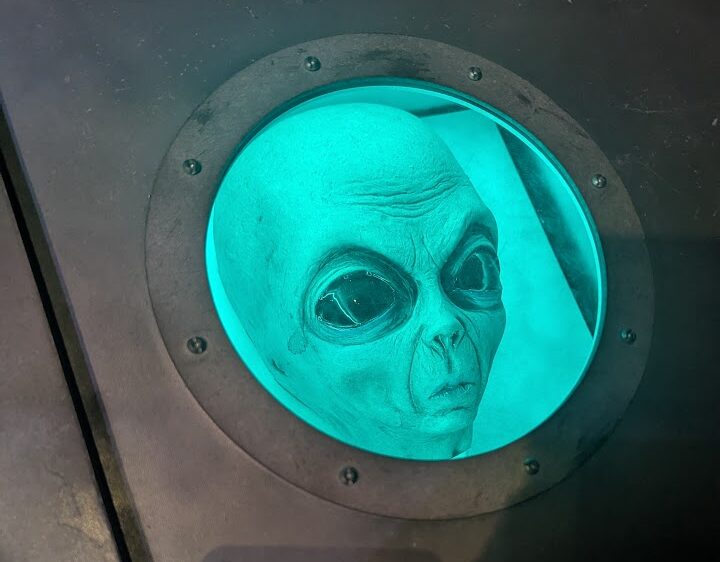
Eventually, the true nature of Project Barnabus is revealed, providing incontrovertible physical proof that Underwood is not dealing in conspiracy theory but in conspiracy fact. Barnabus is not a theory, project, or coded operation, but the name that Underwood bestowed upon the extraterrestrial creature that he rescued and is desperate to keep safe. With this revelation, Underwood’s disembodied voice guides the effort to protect the otherworldly discovery from those pursuing it. By the time the story reaches its finale, the search for answers has become a race to ensure that Barnabus survives.

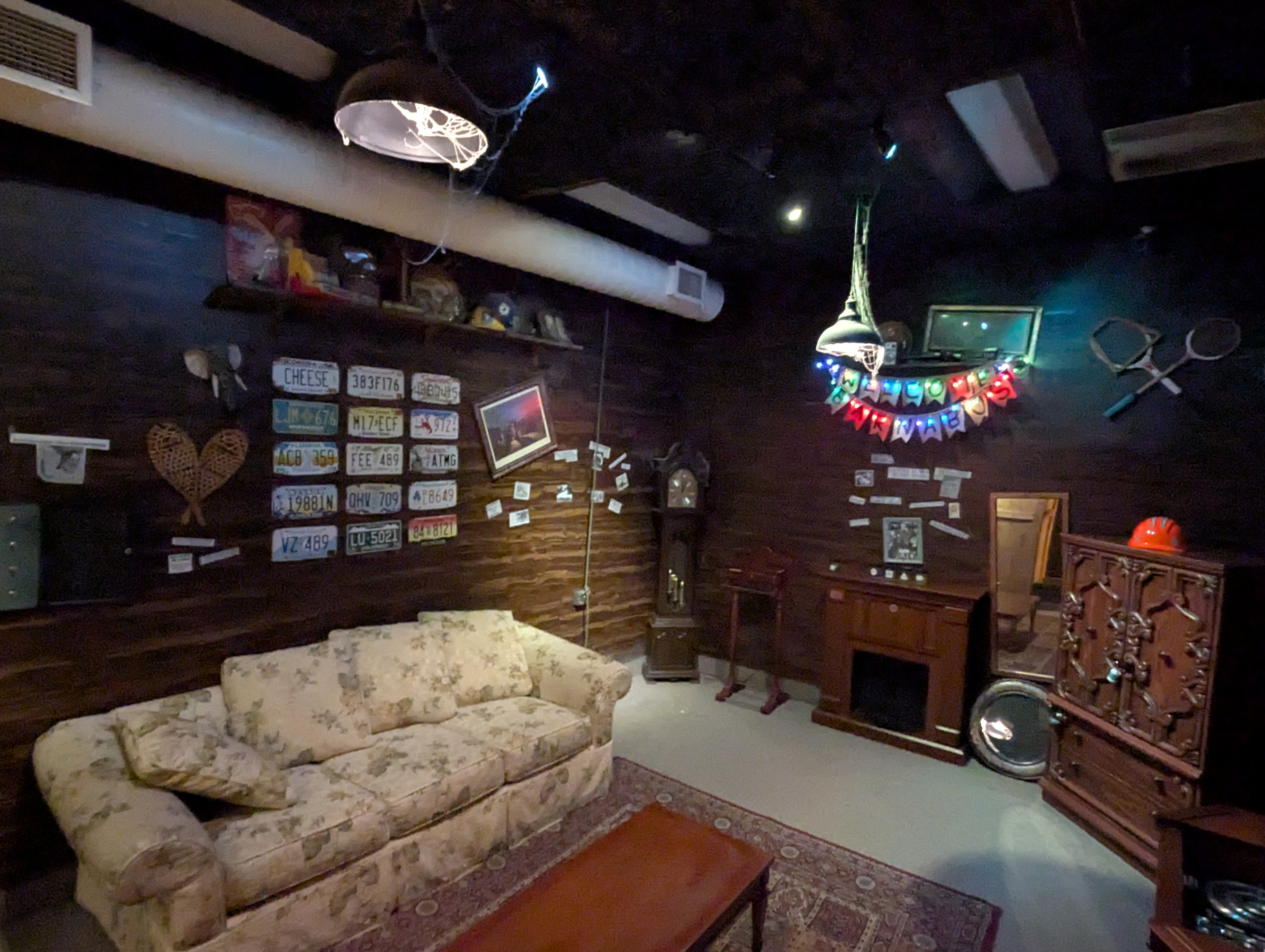
 Underwood’s attic hideaway is a cozy, organized living space that walks a fascinating line between conspiracy and credibility. Is this the refuge of a true believer or is it the workspace of a diligent and obsessed researcher? The longer visitors spend in the attic, the harder it becomes to separate the two.
Newspaper clippings documenting Bigfoot sightings, Roswell incidents, and references to Project Barnabus cover the walls, all carefully cataloged. Christmas lights strung around a “Welcome Barnabus” banner create a warm glow that permeates the space, while license plates hint at years of travel spent chasing answers. Souvenirs from conferences, membership materials from paranormal organizations, and handwritten research notes further reinforce the time and effort that Underwood has devoted to his pursuit. The attic paints a portrait not of a renowned scientist or government insider, but of an ordinary person who happened to stumble onto something extraordinary.
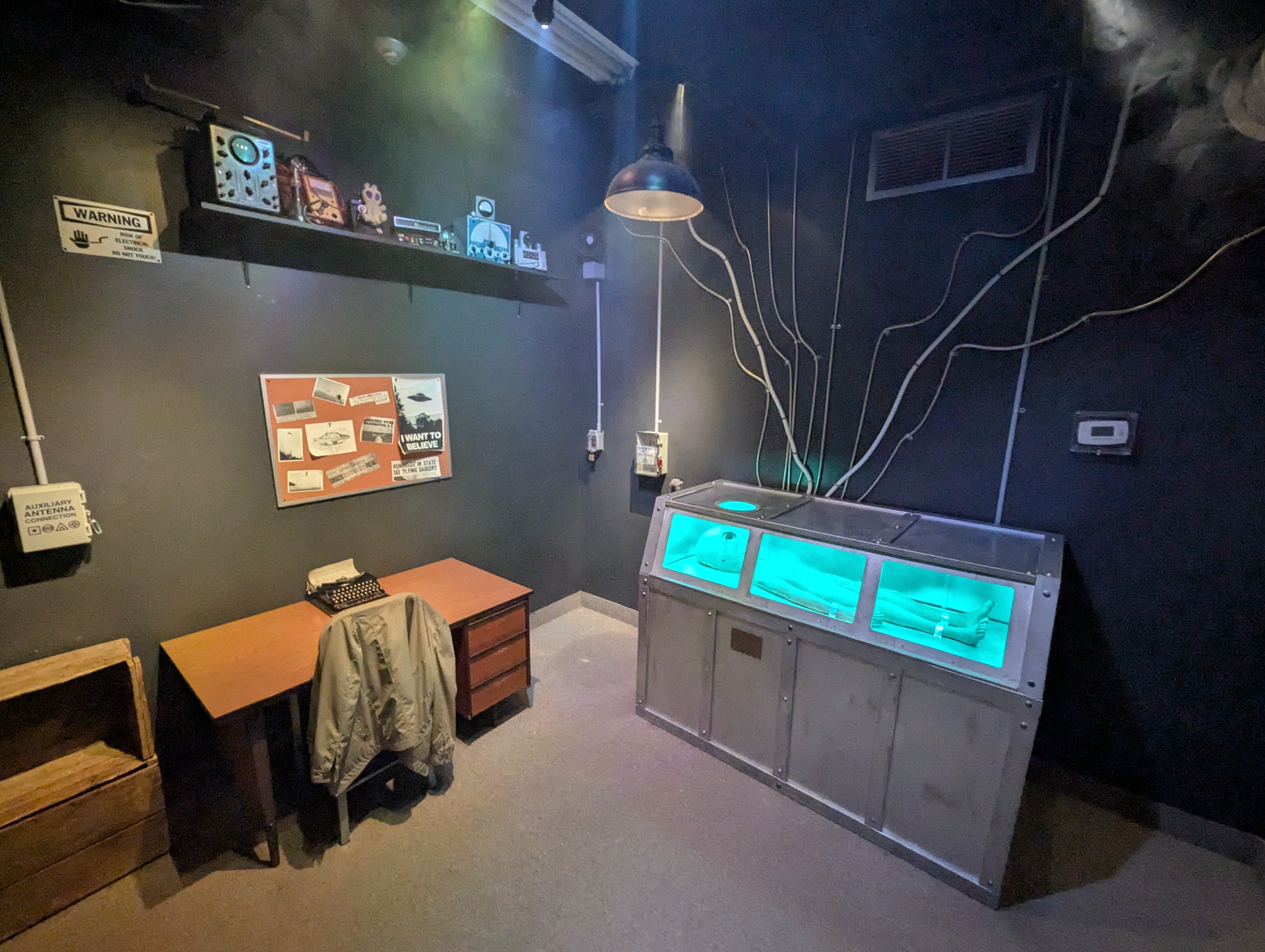
The inviting atmosphere of the attic is contrasted with the other half of the space, a homemade laboratory where Underwood has concealed the results of his research. Transmission antennas, protective switch panels, and whiteboards covered in notes surround the room’s dramatic centerpiece: Project Barnabus itself. While the attic establishes Underwood’s character, the lab allows his presence to become more immediate as he begins communicating directly from afar.
The experience culminates in a finale reminiscent of a vintage radio drama. Thrilling theatrical lighting and practical effects complement Underwood’s narration of the events unfolding beyond the attic walls. 
 While in the attic, the clues that Underwood has left behind are deeply rooted in his research. By collecting paranormal samples, tracking travel logs, and listening to recordings, investigators follow his trail of breadcrumbs through a series of mechanical locks and technical reveals that feel less like overcoming obstacles and more like retracing the path that led to his greatest breakthrough.
Once in the lab, the focus shifts from uncovering the mystery to protecting it. Clearly defined objectives replace the open-ended search for answers, creating a growing sense of urgency without ever feeling abrupt. Whether adjusting transmission equipment, preparing Barnabus for contact with his home planet, or activating the technology that Underwood has assembled, each success feels like tangible progress toward a single goal. As Barnabus moves closer to safety, the laboratory itself becomes increasingly reactive, transforming routine accomplishments into moments that feel charged with consequence.
The strongest puzzle sequences are built around accumulation rather than immediate payoff. Individual clues rarely provide complete solutions on their own. Instead, they contribute pieces to larger conclusions that only become apparent once multiple threads have been connected. This creates a steady sense of momentum throughout the experience, rewarding careful observation as seemingly unrelated discoveries gradually reveal their relationship to one another.

On paper, It Came From The Attic sounds like a collection of ideas that should be difficult to take seriously. Cryptids, UFOs, government coverups, extraterrestrials, and a researcher determined to expose the truth are all familiar ingredients within paranormal fiction. Yet the experience succeeds because it never asks anyone to accept those ideas immediately. Instead, it asks them to believe in James Underwood.
By grounding the experience in one person’s passion, curiosity, and determination, the mystery transforms what could have been a larger-than-life conspiracy into something surprisingly personal. Every clue, recording, and revelation serves a larger purpose: building confidence in the man at the center of it all. As a result, the more extraordinary the discoveries become, the more natural they feel.
The end result is an adventure that balances wonder and urgency without losing sight of the human story at its center. By the time the final moments unfold, the focus is no longer on whether the impossible exists. It is on helping Underwood protect Barnabus, the impossible creature he fought so hard to save.
Show your support for Escape Authority and get social with us:



Venue: Looking Glass Adventures
Location: Toronto, Ontario, Canada
Number of Games: 4
GAME SPECIFIC INFORMATION:
Duration: 60 minutes
Capacity: 10 people
Group Type: Private / You will not be paired with strangers.
Cost: $34.95 – $40 per person (depending on group size)

We thank Looking Glass Adventures for inviting us to play this game. Although complimentary admission was generously provided, that in no way impacts the opinion included within this review.
