










RATING: 3 Keys RESULT: Win REMAINING: Not Timed
This mysterious and social media addicted killer took the idea of “cancel culture” WAY too seriously.
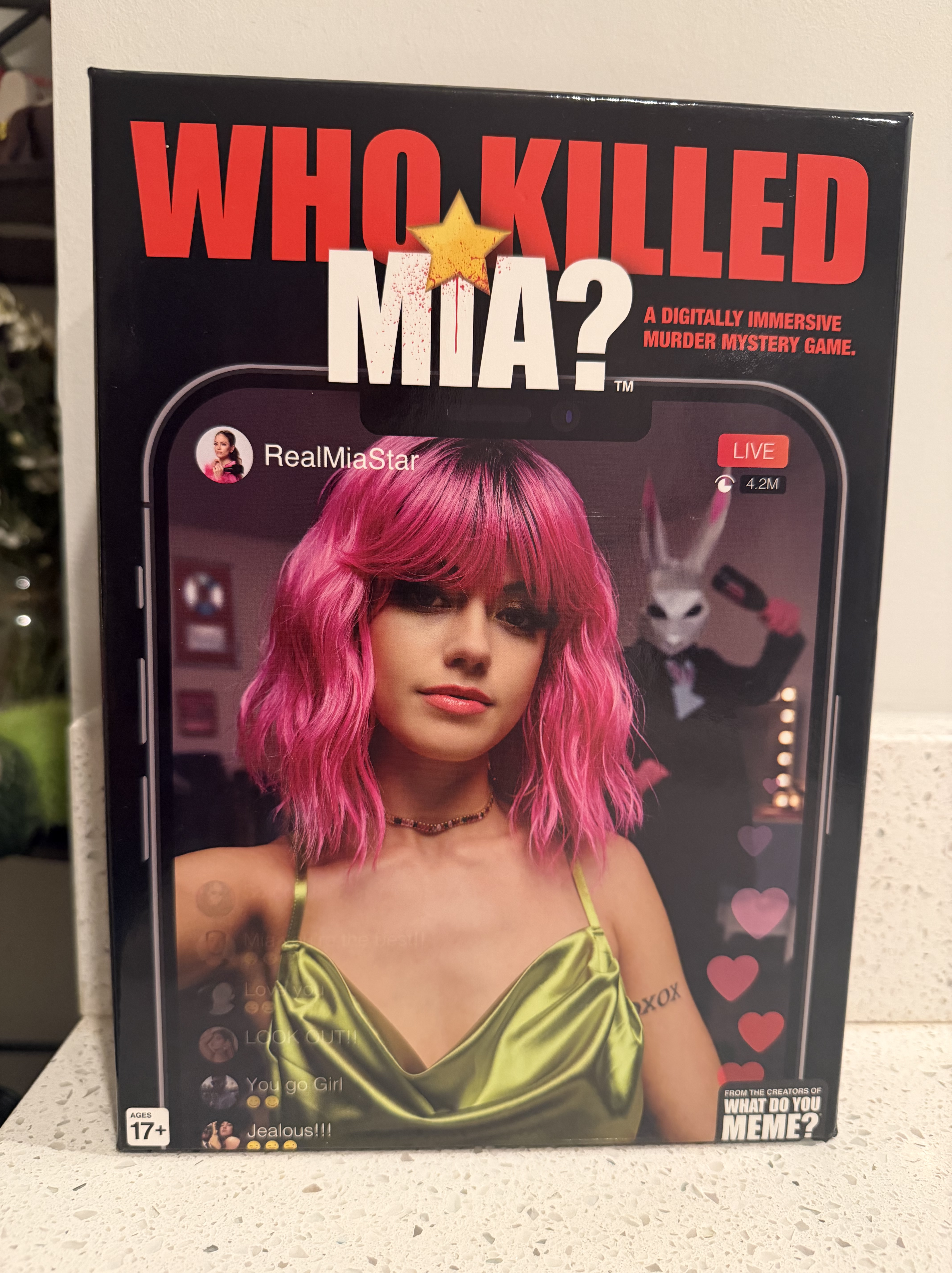





Millions of fans are watching when mega-influencer Mia Star is murdered during a social media live stream. It’s up to you, the private investigator, to help solve the case.
Tapping into the modern obsession with influencer culture and digital drama, Who Killed Mia? targets a young, tech-savvy audience with its social-media-focused story and setting. The narrative centers around Mia Star, a massive online personality whose glamorous and highly curated life is cut short after being murdered in the middle of a live broadcast. This is no traditional mystery, but rather one that feels ripped straight from a true-crime podcast or a viral TikTok trend. The game’s premise thrusts investigators right into the chaos surrounding her death, involving analysis of her rival, business partners, and lover to find out who exactly pulled the plug on Mia’s empire.
Progressing through the experience unlocks more details about what happened and why it did. Unfolding across three distinct phases (days), tension naturally builds as more of Mia’s digital footprint is discovered and the suspects become increasingly suspicious. Although some of the dialogue, especially the transcripts from the police interrogations, can be cheesy and unrealistic, the word choices seem deliberate from start to finish. The flow and reveal of new information ensure the narrative never feels disconnected from the gameplay, keeping momentum high throughout the solve.
A large portion of the investigation takes place online. The main website is mostly unthemed, which greatly hurts immersion. This page is where solutions will be submitted, and the creators missed an opportunity to make it more like a police database. The mechanic for showing incorrect answers made it easy to brute-force puzzles, which ended up spoiling the first act’s solution before the team could realize how it worked. The other virtual elements were much stronger in regards to staying in-world. Hacking into Mia’s cloud and looking at some of her videos mimics a real social media influencer.

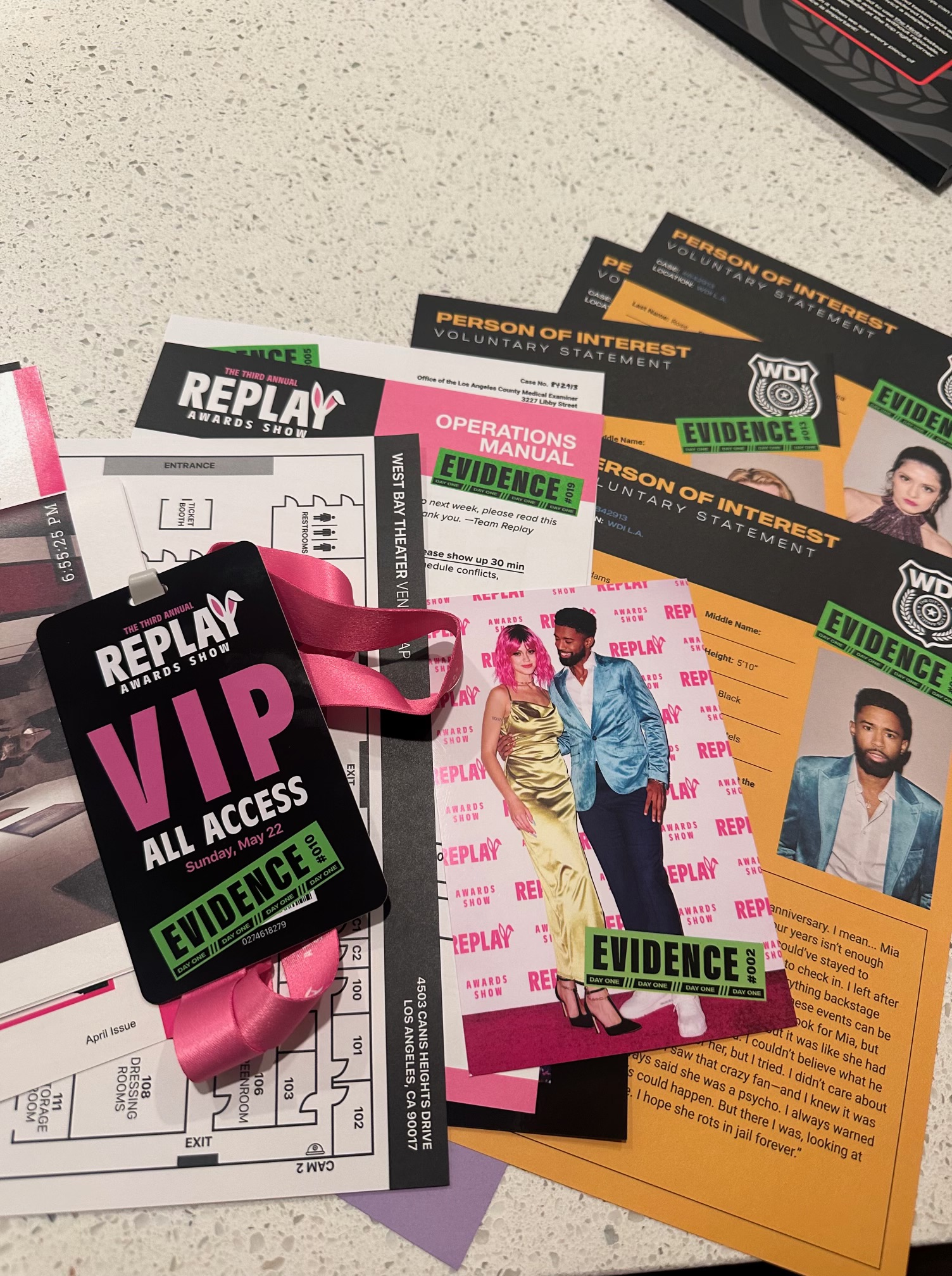
 A major part of solving this crime involves deeply analyzing several physical props and papers. The game is packed with information, which becomes almost overwhelming by the time the solution is discovered. These items are well-made, using glossy pages and textures to evoke the feeling of unboxing a genuine case file. The attention to detail in these components goes a long way in selling the illusion that this is a real-world murder and encourages everything to be passed around and carefully deciphered.
The digital video elements are very well crafted for the most part. Relying so heavily on live-action scenes is an ambitious and largely successful choice here, but there are moments when they fail to advance the narrative. The costuming is distracting at times, and the production value feels uneven, especially near the end. While this does not break the game, it contrasts with the high-quality items and is a constant reminder that this is, in fact, just an experience.

 Regarding the actual puzzle-solving mechanics, the game’s structure is surprisingly straightforward, relying more on deduction rather than complex challenges. There are really only four distinct tasks to solve throughout the entire experience. The core difficulty lies in sifting through the noise to determine which pieces of evidence are actually relevant to the question at hand.
The difficulty curve feels a bit bumpy straight out of the gate. The very first puzzle encountered involves a digital hurdle that feels more like a frustrating logic leap than a satisfying solve. This requires investigators to read between the lines in one of the several papers initially provided, then use the information found in a seemingly unrelated part of the game to identify the solution. It is more about guessing what the designers were thinking than following an intuitive trail of clues.
This unevenness continues through to the game’s climax. The final solve, the ultimate reveal in which the killer’s identity is officially pinpointed, feels anticlimactic compared to the dramatic buildup. This hinges entirely on spotting one specific clue among the pile of evidence, then finding that detail twice more. Once that single item is found, the entire mystery unravels almost instantly. All the irrefutable proof happens in the exact same spot, so finding these pieces among the others is not exactly a hard challenge.

Ultimately, Who Killed Mia? succeeds most when viewed not as a rigorous, complex puzzle challenge but as an interactive narrative experience for game night. It’s a perfect case to crack open with a group of friends who share a love for true crime or internet drama. Because the heavy lifting involves reading, watching, and organizing evidence rather than solving ciphers, it is incredibly accessible to casual investigators who are simply looking for a fun way to kill a few hours. The online approach also naturally keeps everyone engaged, creating a highly collaborative and energetic atmosphere.
Despite some bumps in the puzzle design and web components, the ambition and tactile quality make it a worthwhile playthrough. The physical props are impressive, and the story mirrors real-world influencer culture in a fresh way. Going in expecting a hardcore, challenging escape game in a box will be disappointing. This is best enjoyed as a chill evening activity where detectives can fully immerse themselves in the soapy, satisfying, and sometimes corny whodunit.
Show your support for Escape Authority and get social with us:



Venue: What Do You Meme?
Location: At Home Game
Number of Games: 1
GAME SPECIFIC INFORMATION:
Duration: 120 minutes
Capacity: 1+ people
Group Type: Private / You will not be paired with strangers (but if you are, call 911 immediately to report a home invasion.)
Cost: $29.99