











RATING: 2 Keys RESULT: Win REMAINING: 3:23
Please insert your four-digit PIN to… stop another murder?





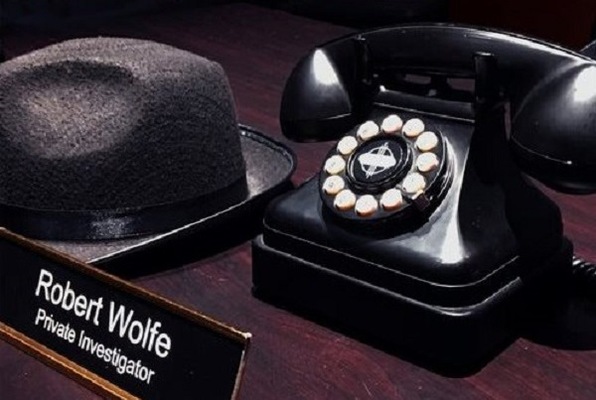 Detective Robert Wolfe has finally solved his most recent murder case. When you arrive at his office, he’s not there. Can you solve what seems to be the perfect crime?
A masked man appears on a monitor and explains that Detective Wolfe was getting a little too close to cracking the case, forcing him to intervene personally to ensure he will get away with what he views as his perfect crime. As amateur gumshoes arrive on the scene, they find that the detective has indeed vanished (leaving behind at least one dismembered arm). The killer promises that he will return in exactly 60 minutes to add their names to his list of victims… unless they can use Wolfe’s notes to re-solve the murder first!
The Perfect Crime has all the right elements for a pulpy detective thriller: suspects, motives, alibis, and a missing investigator who may or may not still be alive somewhere off-screen. Those ingredients, unfortunately, never become much more than window dressing for the next locked drawer. As new information is uncovered, very little of it deepens the storyworld or makes the mystery feel any more urgent. Instead, it feels like the narrative only exists to justify the next puzzle hidden somewhere in the office.
Outside of the framing device, Detective Wolfe never becomes much more than the guy who was here before aspiring sleuths arrived. The evidence discovered throughout the game includes police reports, maps, and pages from the suspects’ journals, yet almost nothing that reveals how Wolfe himself approached the investigation. There are no handwritten notes in the margins, no crossed-out theories pinned to the walls, no desperate late-night observations scribbled across loose paperwork. For a detective supposedly consumed by this case, he leaves behind remarkably little of himself. The investigation never builds enough tension to feel like a dangerous conspiracy is being uncovered piece by piece. Instead, the hunt for answers becomes an exercise in processing evidence in the order it was left behind, more akin to the work of office interns than detectives.

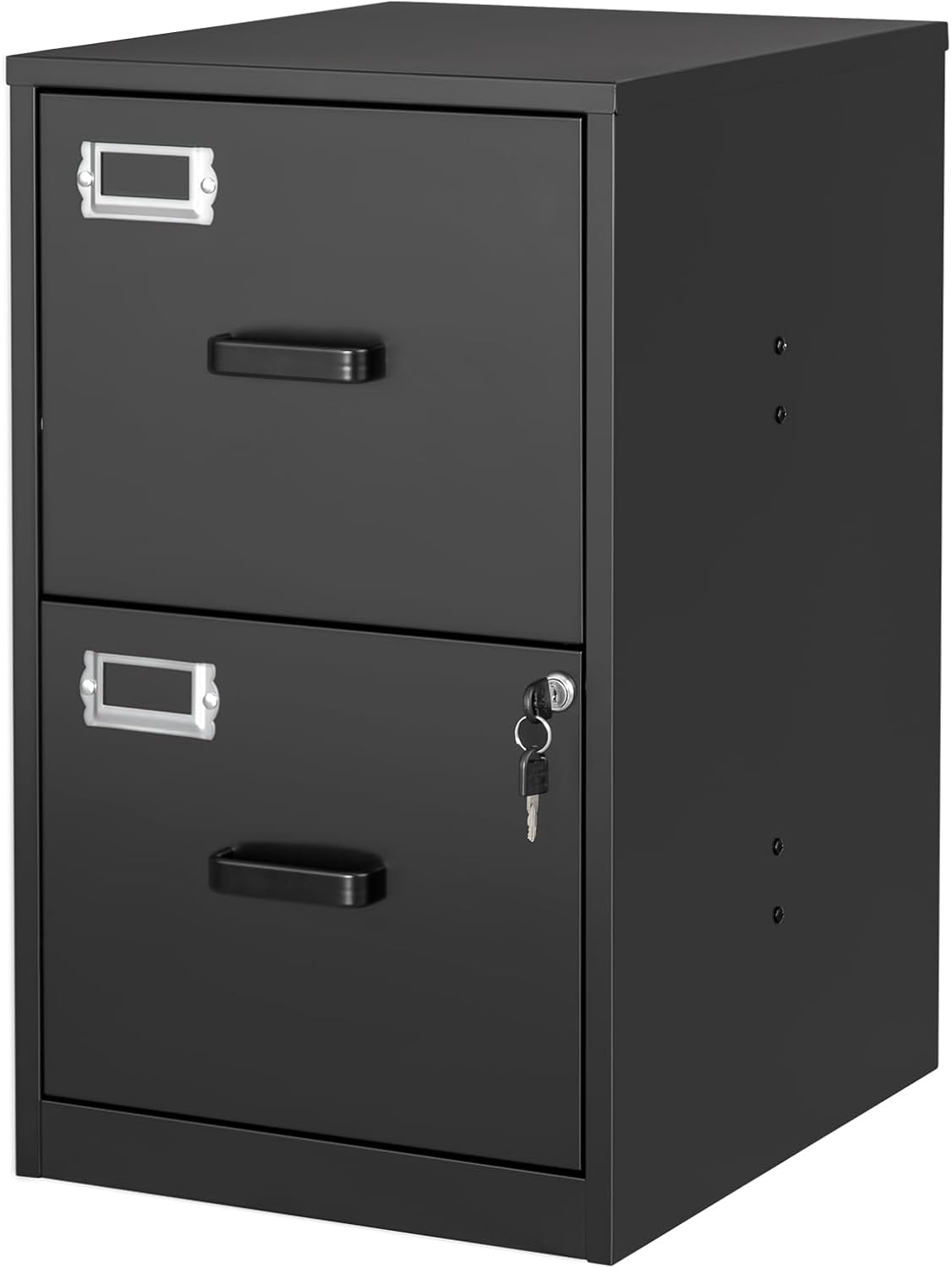
The entirety of The Perfect Crime takes place within Detective Wolfe’s office. The workspace is full of filing cabinets, drawers, and containers which, when unlocked, reveal the artifacts and evidence collected throughout the investigation. Though there is clearly an attempt to present the office as the headquarters of a detective obsessed with solving this particular mystery, the setting itself is a sparsely decorated, modern office space whose fluorescent lighting evokes more “mid-level insurance agency” than “hardboiled detective noir.”
Nearly every object in the room immediately identifies itself as part of the game, with few details that make the office feel lived-in beyond its function as puzzle infrastructure. Locks cover the cabinets and containers throughout the office, accompanied by icon stickers that, as one will discover, are designed to help players match puzzle solutions to the correct location. The constant parade of locks, stickers, and puzzle markers makes it nearly impossible to maintain the illusion of being an active crime scene, and often comes off more like standing inside a puzzle flowchart wearing a trench coat than uncovering secrets hidden within the detective’s workspace.

 Throughout this investigation, the puzzles themselves are generally logical and clearly communicated, making progression easy to follow. At no point does the game feel intentionally confusing or unfair in the way that information is presented, and it follows a straightforward, linear structure: uncover a clue, solve a puzzle, open a locked container containing the next clue for the next puzzle. This structure, in and of itself, is not problematic. The larger issue is that the solutions to the puzzles are centered more around finding random sequences of numbers from the given clues, rather than asking players to actually think about what the information means.
Late in the experience, the mystery culminates with identifying the correct suspect using the information gathered during the investigation. Conceptually, it is exactly the kind of finale a detective game should build toward. However, because the collected evidence has not needed to be analyzed critically (or narratively) throughout, it might become far too tempting to brute force through the possible suspects until one of them produces the correct four-digit PIN to progress the game. It is less “innocent until proven guilty” and more “innocent until you have the correct code” which, in a detective fantasy, is far less satisfying.
Even an investigator-in-training might deduce the aforementioned icon system was likely added in response to complaints about not knowing which lock a code belonged in rather than an organic extension of the storyworld. While it does make the path of progression clearer, the resulting investigation follows such a meticulously planned itinerary from one destination to the next that it rarely evokes any sense of true discovery.

Detective stories thrive on the notion that every new clue matters, with each piece of evidence pulling investigators deeper into something hidden just beneath the surface. The Perfect Crime understands the elements of that genre, but rarely builds beyond those ingredients into something tense, immersive, or particularly mysterious.
Throughout the experience, the illusion of detective work gradually gives way to the visible machinery underneath it all. Instead of a frantic search through a detective’s office before the killer returns, the investigation feels more like completing a heavily-labeled filing system one drawer at a time.
Although there are flashes of stronger ideas presented in the game, it never fully commits to that fantasy. By the end, the game does not reward noticing subtle inconsistencies, connecting threads, or drawing conclusions from the evidence; it rewards finding the correct four-digit code. Ultimately, The Perfect Crime’s biggest problem is that it presents the structure of a detective story without ever uncovering the secret of what it means to actually be one.
#BevsPicGotLeftInALockedDrawer
Show your support for Escape Authority and get social with us:



Venue: Escape Room Madness
Location: New York, New York
Number of Games: 6
GAME SPECIFIC INFORMATION:
Duration: 60 minutes
Capacity: 12 people
Group Type: Private / You will not be paired with strangers.
Cost: $40-55 per person (depending on group size)